
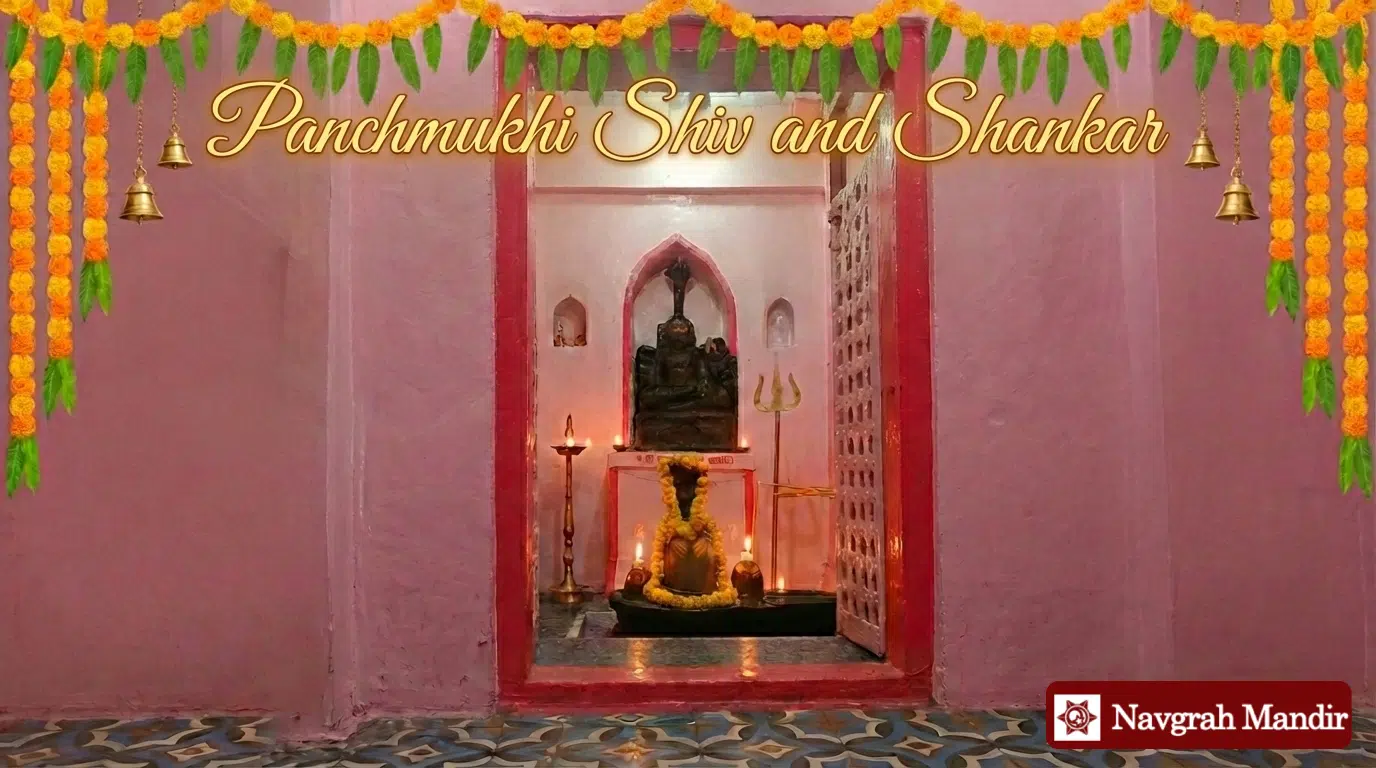
Panchmukhi Shiv & Panchmukhi Shankar at Shri Navgrah Mandir, Khargone
“A Rare and Divine Manifestation in the City of Navgrahas”
In the heart of Khargone, the sacred City of Navgrahas, stands the historically revered Shri Navgrah Mandir — a temple where divinity, astrology, and ancient Vedic heritage converge. Among its many rare and powerful features, the presence of Panchmukhi Shiv as both idol and lingam makes this temple spiritually extraordinary and unique in India.
The Divine Power of Panchmukhi Shiva
In Indian culture, Lord Shiva is worshipped as the Supreme God — the timeless, formless, unborn, and indestructible force who governs dissolution and transformation. While Shiva is adored in countless forms, His Panchmukhi (five-faced) manifestation is considered the most powerful, expansive, and cosmic form.
Why the Panchmukhi Form is Extremely Powerful
The five faces of Shiva represent:
-
Sadyojata – Creation
-
Vamadeva – Preservation
-
Aghora – Destruction
-
Tatpurusha – Concealed knowledge
-
Ishana – Supreme consciousness
This terrifying yet benevolent form symbolises ultimate protection from:
-
Negative planetary influences
-
Evil forces
-
Obstacles in life
-
Unknown dangers
Just the darshan of Panchmukhi Shiva is said to remove sins, fears, and karmic disturbances instantly.
Khargone is blessed to have one of the very rare temples where Panchmukhi Shiva exists in two forms simultaneously:
-
Panchmukhi Mahadev (Lingam Form)
-
Panchmukhi Shankar (Idol Form)
Such a divine dual presence is almost unheard of in most Indian temples.
Foundation Rooted in Ancient Scripture
The temple was founded on Makar Sankranti, Shaka Samvat 1700, by Shri Shesh Baba (Sheshappa) Sukhavadhani, a South Indian saint and an ardent devotee of Mata Baglamukhi.
The consecration of the temple is based on the timeless mantra:
“Brahma Murari Tripurantakari,
Bhanu Shashi Bhumisuto Budhashcha ।
Gurushcha Shukra Shani Rahu Ketavah,
Sarve Grahah Shanti Kara Bhavantu ॥”
According to this:
-
Mata Saraswati represents Brahma
-
Pattabhiram (Shri Ram Darbar) represents Vishnu
-
Panchmukhi Mahadev represents Mahesh
Thus, Panchmukhi Mahadev completes the divine trinity within the temple.
The Panchmukhi Mahadev Temple: A Rare South Indian Style Sanctum
The third sanctum of Shri Navgrah Mandir is dedicated entirely to Panchmukhi Mahadev, crafted in South Indian (Telugu) Vedic style.
✨ Highlights of the Temple Structure:
-
The entrance features Riddhi-Siddhi-Buddhi Ganesh, symbolising auspiciousness.
-
Inside, devotees first witness:
-
Panchmukhi Mahadev (Lingam Form)
-
Panchmukhi Shankar (Idol Form)
-
The Panchmukhi Idol (Shankar Murti)
-
Five faces (Panchvaktra) and ten arms
-
Seated with Mata Parvati on His lap
-
Sculpted with detailed iconography
-
Below the idol:
-
A bull (Nandi) symbolising Shiva
-
A lion, symbolising Parvati
-
This form of Sadashiva is predominantly worshipped in South India and is extremely rare in North and Central India.
The Panchmukhi Lingam
In the middle of the sanctum lies:
-
A grouping of five Shiva Lingams
-
Four smaller lingams
-
One large central lingam made of white stone
The central lingam is unique because:
-
It naturally bears the imprint of a Bilva leaf
-
A serpent is carved as if moving towards Lord Shiva
-
The lingam radiates purity, power, and peace
The presence of both the murti and lingam forms of Panchmukhi Mahadev in the same temple is extraordinarily rare, making Khargone’s Shri Navgrah Mandir one of its kind in the entire country.
Nandi – The Divine Guardian
In front of the sanctum sits a beautifully carved Nandi statue, representing:
-
Devotion
-
Patience
-
Absolute surrender
Nandi is said to silently carry the prayers of devotees directly to Mahadev.
Navgraheshwar Mahadev – Protector From Planetary Afflictions
Within the temple complex, Navgraheshwar Mahadev is installed specifically for:
-
Neutralising Navgraha doshas
-
Relieving planetary afflictions
-
Granting protection from karmic obstacles
This enhances the temple’s role as a Graha Shanti Peeth, where Shiva’s power aligns with planetary harmony.
Spiritual Significance & Rituals of Panchmukhi Mahadev
1. Shravan Month Rituals
During Shravan, the holiest month for Shiva:
-
Daily Rudrabhishek is performed
-
Special Monday pujas take place
-
The deity is adorned with flowers and sacred offerings
2. Maha Shivratri Celebrations
On Maha Shivratri, the temple witnesses:
-
Four-prahara Mahabhishek
-
Night-long chanting of Rudra, Shiva Stuti, and Shiva stotras
-
Thousands of devotees are seeking divine blessings
3. Benefits of Worshipping Panchmukhi Mahadev
According to temple traditions:
-
Unmarried boys and girls find relief from marriage-related obstacles
-
Couples receive blessings for fertility (Santaan Prapti)
-
Devotees gain strength to overcome:
-
Black magic
-
Fear
-
Hidden enemies
-
Psychological burdens
-
Legal and financial troubles
-
A Rare Blessing for the People of Khargone
Shri Navgrah Mandir is one of the few places in India where:
-
Panchmukhi Mahadev (Lingam)
-
Panchmukhi Shankar (Idol)
-
Mata Parvati
-
Nandi
-
Navgraheshwar Mahadev
…all coexist in one sacred complex.
This makes the temple a powerhouse of:
-
Graha Shanti
-
Rudra Shakti
-
Divine protection
-
Spiritual awakening
Conclusion
The presence of Panchmukhi Mahadev at Shri Navgrah Mandir, Khargone, is not just a spiritual feature — it is a rare celestial blessing, a symbol of cosmic power, and a gateway to divine transformation. The energy of Shiva’s five faces continues to protect, uplift, and guide thousands of devotees every year.
- Read the complete history of Shri Navgrah Mandir Khargone.
- Learn about the Surya Kiran Utsav and the Sun-ray alignment inside the temple.
- Explore the significance of Mata Baglamukhi at the Pitambara Graha Shanti Peeth.
- Learn about Shri Navgrah Mela & Palkhi Yatra of Shri Navgrah Maharaj.
FAQ
❓ What is special about Panchmukhi Shiv at Shri Navgrah Mandir Khargone?
Shri Navgrah Mandir Khargone houses both the Panchmukhi Shiv idol and Panchmukhi Lingam, a rare dual presence found in very few temples in India.
❓ Why is Panchmukhi Shiva considered powerful?
Panchmukhi Shiva represents the five cosmic functions — creation, preservation, destruction, concealed wisdom, and supreme consciousness — making this form extremely protective and transformative.
❓ What is unique about the Panchmukhi Lingam in Khargone?
The central lingam is carved from white stone and bears a natural Bilva leaf imprint with serpentine engravings, symbolising purity and divine grace.
❓ What rituals are performed for Panchmukhi Mahadev?
During Shravan, daily Rudrabhishek is performed. On Maha Shivratri, four-prahara Mahabhishek and night-long Shiva chants are conducted.
❓ Does worshipping Panchmukhi Mahadev remove obstacles?
Yes. Devotees believe that Panchmukhi Shiva removes obstacles related to marriage, childbirth, enemies, fears, and planetary afflictions (graha doshas).